
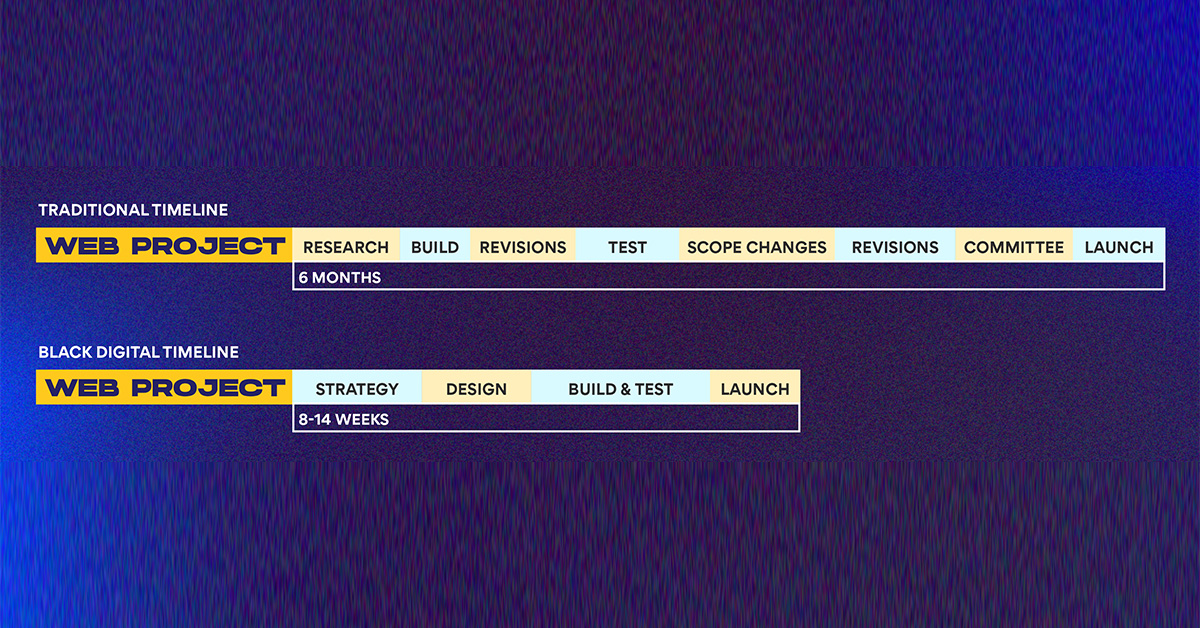
Most nonprofit website redesigns take four to six months. They do not need to.
According to Kanopi Studios’ nonprofit web research, 68% of nonprofits redesigned their website in the past three years, yet most of those projects ran over timeline, over budget, or both. The timeline stall is rarely about design quality or technical complexity. It is a signal of unclear scope, undefined approval structures, and a design-first approach that treats the website as a creative project rather than an operational system.
Organizations that compress timelines to 8–14 weeks share one pattern: they lock strategy before design begins, centralize decision-making, and plan for phased launch rather than perfection.
The cost of delay is real. A six-month redesign means six months of donor messaging misalignment, enrollment funnel disconnects, and internal team fatigue. For nonprofits competing for attention during giving seasons and enrollment periods, a delayed website launch is not neutral — it is a competitive loss.
The Hidden Cost of Long Timelines
Website redesigns rarely fail because of design quality. They fail because of process.
A nonprofit marketing director waits for committee feedback. A program director asks for “just one more revision.” A communications leader suddenly realizes the homepage does not reflect a new strategic direction. By the time all opinions converge, eight weeks have become five months, the designer has moved on to other clients, and the budget has shifted twice.
The real cost is not the timeline itself — it is what happens during the stall.
Donor messaging continuity breaks.
If your redesign spans Q3 and Q4, you are redesigning your site during peak giving season. The homepage that should be emphasizing year-end giving is locked in revision. Your email campaigns point to messaging that no longer lives on the site.
Enrollment funnels disconnect.
For higher education institutions, a six-month redesign often spans recruitment cycles. According to Search Influence’s 2025 research, 84% of prospective students use search engines as a primary tool for researching schools. A website that is mid-redesign during peak recruitment season is not a neutral presence — it is an active liability.
Internal teams burn out.
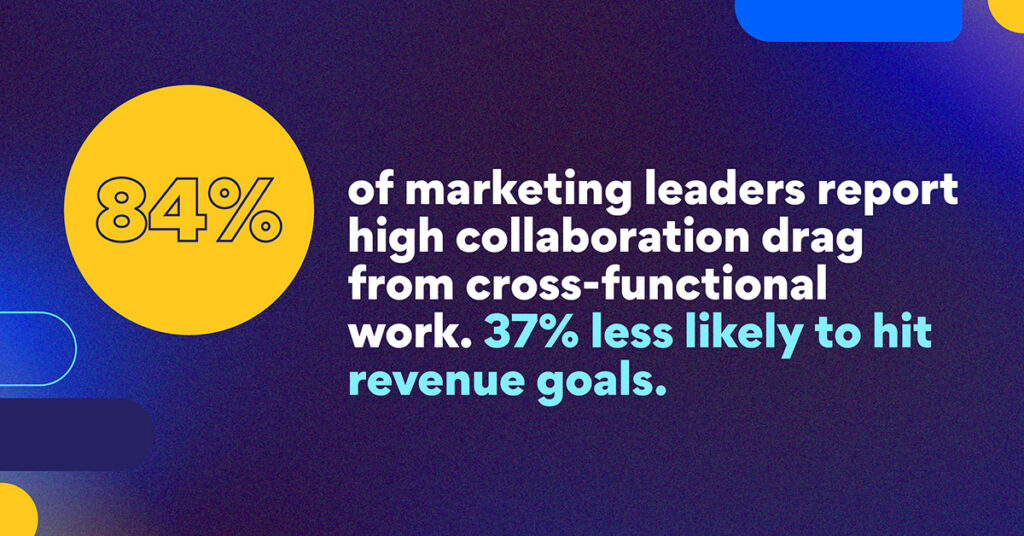
Website redesigns require sustained stakeholder engagement. By month four, decision-makers are exhausted, quality suffers, and scope creep accelerates. According to Gartner research on cross-functional collaboration, 84% of marketing leaders report high “collaboration drag” from cross-functional work, and organizations experiencing it are 37% less likely to achieve revenue goals.
Budget exposure increases.
A five-month project costs more than an eight-week one. Design hours expand. Hosting and staging environments run longer. Vendor costs accumulate.
The organizations moving fastest are not cutting quality. They are cutting process friction.
Where Time Actually Gets Lost: Three Breakdown Points
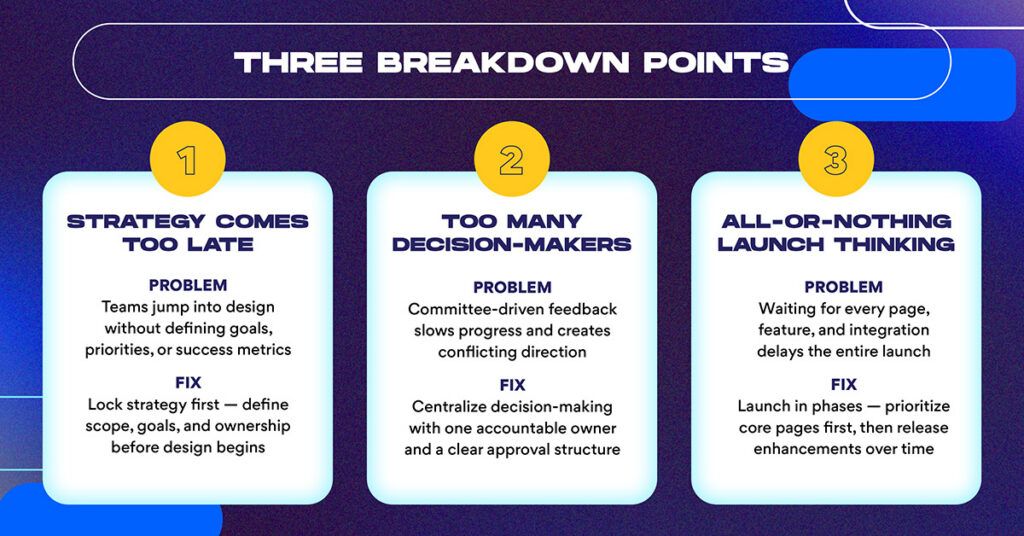
Long timelines almost always fail at the same three pressure points.
Breakdown Point 1: Design Before Strategy
Most nonprofit website redesigns start with a design conversation. “We need to look more modern.” “Our site feels outdated.” The team assembles mood boards, approves color palettes, and debates typography before anyone has answered the fundamental question: what do we need our site to do?
When design precedes strategy, revisions multiply. The designer delivers mockups for the homepage. Communications wants to highlight donor testimonials. Development realizes the proposed architecture will not integrate with the CRM. The executive director asks why certain programs are not featured. Now it is week five, mockups are going back to the design team, and the timeline has already slipped.
Organizations that compress timelines lock content strategy and information architecture before design begins:
- Content audit: what pages exist, what is outdated, what is missing
- Information architecture (IA): how users navigate to key goals (donor signup, student inquiry, program information)
- Messaging framework: what core messages appear on which pages and why
- Stakeholder alignment: agreement on what the site needs to accomplish
This work takes one to two weeks. It feels like overhead. It prevents eight weeks of revision cycles.
Breakdown Point 2: Decision-Making Without Clear Authority
Committee feedback is democratic. It is also how websites take six months to redesign.
Your team establishes a color palette. Three stakeholders love it. One does not. You form a subcommittee to discuss brand alignment. That subcommittee proposes new options. Now you are back to the design team, and two weeks have evaporated.
The solution is a single point of contact (POC) — typically the Director of Communications or a senior leader comfortable with decision-making authority. This person owns feedback consolidation. They gather input from stakeholders, synthesize it, and deliver one clear direction to the design and development teams.
According to project management research, organizations implementing a SPOC model see a 20% increase in project delivery speed. At Black Digital, this governance model is standard across all website projects — including the BDC Strategy Group redesign, where a centralized approval structure helped deliver a complete website overhaul in under two months, boosting user engagement by 353%.
Breakdown Point 3: All-or-Nothing Launch Thinking
Many nonprofit teams operate with an implicit assumption: the website redesign is done when everything launches simultaneously.
Every page. Every feature. Every integration. Every piece of content. Live at once.
This creates a false deadline. If one piece is not ready, nothing launches. A broken form means the whole site stalls. New CRM integration incomplete? Everything waits.
Organizations moving faster use a phased approach: the MVAP (Minimum Viable Asset Package).
The first launch includes core pages needed for immediate operational goals. For a nonprofit in giving season, that is homepage, donation flow, and impact stories. Program pages launch two weeks later. Advanced CRM integrations launch in month two. This does not compromise quality — it creates operational clarity.
Phased launch also de-risks the process. If something breaks on the homepage, it is fixed quickly without affecting 50 other pages. Real user feedback informs Phase 2 planning.
The Compressed Timeline Framework: 8–14 Weeks
Here is what a well-governed redesign looks like, broken into four phases.
Phase 1: Strategy Lockdown (Weeks 1–2)
- Content audit: catalog what exists, what is performing, what is outdated
- IA finalization: map user journeys for core goals (donor signup, volunteer inquiry, student application)
- Messaging framework: define what core messages live where and why
- Scope definition: what launches in Phase 1, what launches after
- Stakeholder alignment: single POC identified, approval process documented
Phase 1 Deliverables: content audit report, site map, messaging brief, scope document, approval workflow.
Phase 2: Design and Development Setup (Weeks 3–4)
- Design brief approved based on locked IA and messaging
- Design commences on locked scope only
- Development environment established: hosting, version control, security baseline
- Content production assigned: copywriting, image sourcing, video
- CMS selected and configuration planning begins
Phase 2 Deliverables: design mockups for locked scope, development environment ready, content timeline.
Phase 3: Build and Test (Weeks 5–10)
- Design components built by development
- Content migrated and optimized for web
- QA testing: functionality, forms, integrations
- Accessibility testing: WCAG 2.1 AA compliance
- Performance baseline established: page load, Core Web Vitals
- Parallel: copywriting, image optimization, video integration
Phase 3 Deliverables: QA pass rates 90%+, accessibility report, performance baseline, content migration complete.
Phase 4: Launch and Iteration (Weeks 11–14)
- Phased release: core pages first (homepage, donation flow, key program pages)
- Post-launch monitoring: real-time issue tracking
- Analytics setup and baseline capture (GA4 event tracking)
- Quick-fix rapid response: 48-hour turnaround on critical bugs
- Secondary pages and advanced features launch in Weeks 15–18
Phase 4 Deliverables: live site, post-launch performance data, documentation for internal team.
Three Governance Decisions That Accelerate Everything
Decision 1: Single Point of Contact for Approval
Identify one senior decision-maker who owns website direction. This person gathers input from stakeholders, consolidates feedback, and delivers clear direction to the team. They do not make every decision unilaterally, but they own the approval process.
Impact: reduces feedback cycles from 40+ to 6–8.
Decision 2: Fixed Comment Windows
Establish 48–72 hour feedback cycles. Team delivers mockup or draft. Stakeholders have two days to comment. POC consolidates. Team implements. No open-ended delays.
Impact: creates predictable timeline momentum.
Decision 3: Scope Lock After Strategy Phase
After Week 2, new feature requests are documented and deferred to Phase 2 or Phase 3. “Nice to have” does not delay “must have.” According to PMI’s Pulse of the Profession, 52% of projects now experience scope creep — up from 43% — making early scope discipline more important than ever.
Impact: prevents scope creep from derailing launch dates.
When to Extend Timelines
Eight to fourteen weeks works for most nonprofits. Some situations require more time:
- Simultaneous rebrand and website redesign: add 2–4 weeks for brand strategy and approval
- Limited internal content resources: add 2 weeks if agency copywriting support is needed
- Complex CMS migration: add 1–2 weeks if moving from a legacy system with extensive data
- Video production: add 2–4 weeks if brand-new videos need to launch with the site
- Regulatory compliance: add 1–2 weeks if compliance review is required pre-launch
Extending timelines is fine. Hiding the reasons is where problems start.
Measurement: How to Know the Timeline Is Actually Working
Track these metrics before and after launch:
Before launch:
- Stakeholder approval velocity (are decisions being made on schedule?)
- Scope stability (how many change requests post-strategy lockdown?)
- QA pass rates (targeting 90%+ by Week 10)
After launch:
- Organic traffic and page indexing
- Donor or student entry behavior (which pages drive application or donation starts?)
- CTA completion rates versus pre-redesign baseline
- Time on critical pages
- Return visitor behavior
For organizations ready to evaluate their current site before beginning a redesign, Black Digital offers a free nonprofit website health check to identify structural gaps and prioritization opportunities.
Frequently Asked Questions
What is the actual minimum timeline for a nonprofit website redesign?
8–14 weeks is realistic for most nonprofits with clear scope and available internal resources. Strategy lockdown in Weeks 1–2, design and development in Weeks 3–10, phased launch in Weeks 11–14. Simultaneous rebrand adds 2–4 weeks; limited content capacity adds 1–2 weeks. The timeline is not about the website itself — it is about how quickly your team can make decisions and provide content.
Can you really lock a website strategy in one week?
Yes, with focus. One week means: audit existing pages, map user journeys for core goals, define messaging themes, and get stakeholder alignment on what launches first. It is not leisurely, but it is achievable for organizations with clear leadership.
What is MVAP and why does it matter?
MVAP (Minimum Viable Asset Package) is the smallest set of pages and features needed to accomplish your primary operational goal. For a nonprofit in giving season, that is homepage, donation flow, and impact stories. For an HBCU, it is homepage, admissions funnel, and campus life content. MVAP lets you launch core functionality while secondary pages and advanced features follow in phases. This reduces risk, accelerates time-to-value, and generates real performance feedback faster.
What happens if we need to extend the timeline?
Document the reason. If it is “we need more time to perfect the design,” that is perfectionism. If it is “we are launching a new program simultaneous with the redesign and need content creation time,” that is legitimate. Real reasons to extend: rebrand, complex CMS migration, regulatory review, video production needs, limited internal content bandwidth. Vague delays signal process problems.
How do we handle stakeholder feedback without derailing the timeline?
Establish fixed comment windows and a single POC for consolidation. Design team delivers mockup. Stakeholders have 48–72 hours to comment. POC consolidates into one clear direction. Team implements. This respects people’s time and ensures decisions are being made on schedule.
Can we really launch a website when not everything is perfect?
Yes. “Perfect” is rarely the constraint — clarity is. If the homepage is ready but footer integration is not, launch the homepage. Holding everything hostage for one unfinished piece is how six-month projects become eight-month projects.
What metrics tell us the compressed timeline actually worked?
Before launch: stakeholder approval velocity, scope stability, and QA pass rates. After launch: organic traffic and page indexing, CTA completion rates versus pre-redesign baseline, donor or student conversion behavior, and time on critical pages. The compressed timeline is only successful if it improves operational outcomes, not just because it was fast.
What is the biggest mistake nonprofits make when trying to compress their timeline?
Starting design before strategy is locked. Teams feel pressure to “move fast,” skip the audit and IA work, jump straight to design, then spend weeks revising mockups because the strategy keeps changing. Invest 1–2 weeks in strategy lockdown. It prevents eight weeks of revision cycles.
Ready to Launch a Site That Performs — On Schedule
Black Digital works with nonprofits, associations, higher education institutions, and mission-driven organizations to build websites that launch on timeline, perform from day one, and support organizational goals without the process debt that six-month projects generate.
If your organization has been through a painful redesign cycle, is currently stuck in revision limbo, or is planning a redesign and wants to avoid those patterns, we can help.
Schedule a free 30-minute web strategy conversation. We will review your current site, identify your highest-leverage structural gaps, and outline what a compressed, governance-first redesign timeline would look like for your organization.
Book a Free Strategy Session →
Or start with our free nonprofit website health check to understand your current baseline before the conversation.